
Presented by
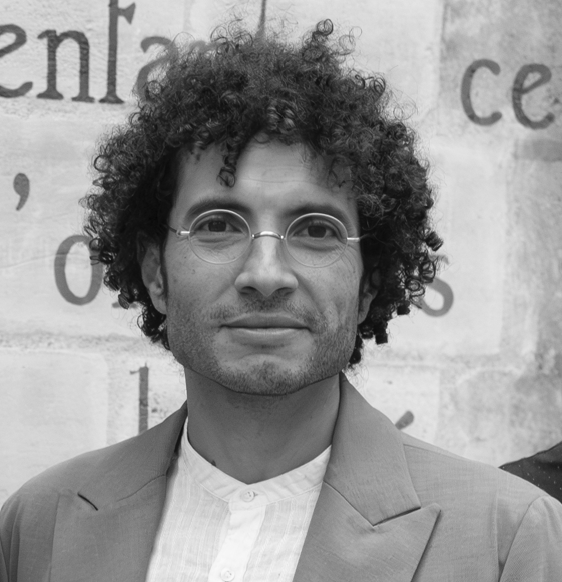
Marius Dorobantu
Dr. Marius Dorobantu is an Assistant Professor of Theology and Artificial Intelligence at VU Amsterdam, a fellow of the International Society for Science & Religion, and the lead-editor of the Routledge volume, Perspectives on Spiritual Intelligence (2024). His first monograph – Artificial Intelligence and the Image of God: Are We More than Intelligent Machines? – is forthcoming with Cambridge University Press. His 2025 TEDx Talk explores from a theological angle why generative AI works better than it should.
His research sits at the crossroads of theological anthropology, philosophy of mind, and AI ethics, asking what artificial intelligence reveals about human uniqueness and the imago Dei. He completed his award-winning doctorate at the University of Strasbourg, and has since led major interdisciplinary projects at the ISSR funded by the Templeton World Charity Foundation — including a current initiative on spiritual exercises running through 2027. His work appears in leading journals such as Zygon: Journal of Religion and Science and the Cambridge Companion to Religion and Artificial Intelligence.
Online: YouTube Live
When: April 9th, 2026. 3:00 pm CEST. Live from Amsterdam.
Abstract
What does it mean for a machine to speak? Could this speech signal some kind of presence? Together with Marius Dorobantu (VU, Amsterdam), who works at the intersection of Theology and AI, we explore how a bridge between these two, the oldest and the newest of academic disciplines, can help explain the nature of language and the staggering success of LLMs. By tracing the lineage from the theological concept of Logos as a generative, world-constituting force, to the emergent capacities of large language models, we probe the idea that there is something quasi-magical about language and its ability to shape and carry intelligence.
This leads us to confront the ethical stakes of the current AI revolution. Because, on the one hand, we are building systems that carry something of our own selves or, as Dorobantu puts it, an "imprint of our humanity": does this imprint bear moral obligations toward the machines themselves? But, on the other hand, we are filling our information ecosystems with AI-generated language, devoid of the intentionality and "soul" of human language: will this degrade the very conditions under which human minds and personhood form and flourish?