projet.y

← Symbolon Seminar

Symbolon × MoC7

A week-long seminar series co-organized by projet.y and the Association for Mathematical Consciousness Science (MoC7), bringing together philosophers, mathematicians and cognitive scientists to explore consciousness at the crossroads of mathematics, phenomenology and the mind.

University of Copenhagen
October 11–16, 2026
Live on YouTube

Seminar Schedule

1. Models of Consciousness: Fireside Chat

When: Sunday, October 11, 10:30 AM

With: Lenore Blum, Johannes Kleiner, Camilo Miguel Signorelli
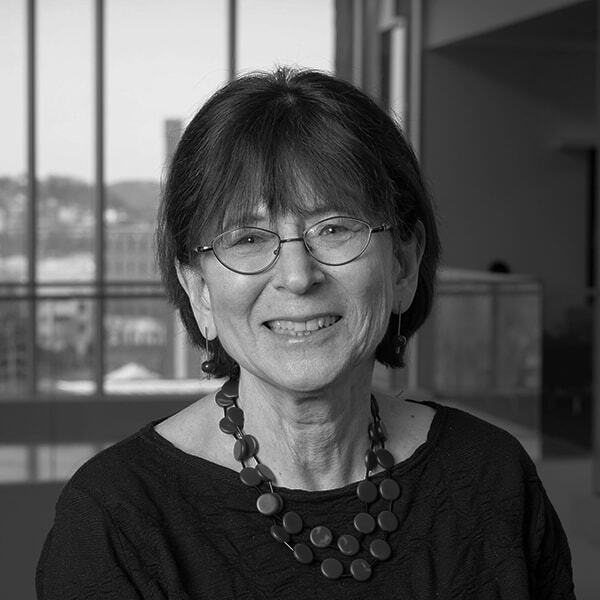
Lenore Blum Johannes Kleiner Camilo Miguel Signorelli

Abstract

On the eve of the seventh Models of Consciousness conference (MoC7), this opening session brings together three people involved in the conference and the Association for Mathematical Consciousness Science (AMCS), which organises it. Since its first edition in Oxford in 2019, the conference has travelled from an online edition to Stanford, Oxford, Bamberg, Hokkaido, and now Copenhagen. The conversation will cover how the series and the association came about, what a mathematical approach to consciousness involves, and how the field has changed over these editions. It will also introduce this year’s programme: its four themes (philosophical foundations; methodologies and measures; AI, LLMs and consciousness science; phenomenology), and a new collaborative project, in which participants will work towards a shared paper on concepts, methodological standards and future priorities for the field.

Lenore Blum is Distinguished Career Professor of Computer Science, Emerita, at Carnegie Mellon University. Her research has moved from logic and model theory to a theory of computation over the real numbers. More recently, with Manuel and Avrim Blum, she has worked on the Conscious Turing Machine, a formal model of consciousness from the perspective of theoretical computer science. She was elected inaugural President of the AMCS in 2021 and sits on the MoC7 advisory board. She has also worked throughout her career to increase the participation of women in mathematics and computer science.

Johannes Kleiner is a mathematician and physicist working on mathematical approaches to consciousness. After a PhD in mathematics at the University of Regensburg, he completed a second doctorate at LMU Munich on what is now called mathematical consciousness science. He is based at the Institute for Psychology of the University of Bamberg. He was the founding chair of the AMCS board and is part of the MoC7 organising committee.

Camilo Miguel Signorelli studies the structure of conscious experience from phenomenological, mathematical and life-centred perspectives, and its implications for physical theories and AI. His work spans mathematical phenomenology, compositional models of consciousness and the neuroscience of consciousness, with past collaborations at the University of Oxford and INSERM-CEA (UNICOG). He is now at the Center for Philosophy of Artificial Intelligence, University of Copenhagen, and is one of the MoC7 organisers.

Artwork for Models of Consciousness: Fireside Chat
3. Empathy, Morality and Care

When: Monday, October 12, 4:00 PM

Presented by: Dan Zahavi

Dan Zahavi

Abstract

Empathy is often presented as a moral force, a counter to selfishness and indifference that should be cultivated and extended. Recent critics have challenged this view. Paul Bloom argues that empathy is biased and distorts moral judgement, and Nils Bubandt and Rane Willerslev point to its use in deception and manipulation. This talk argues that these critiques rely on two common definitions of empathy: as affective sharing (feeling what the other feels), or as imaginative perspective-taking (putting oneself in the other’s shoes). Drawing on the early phenomenological tradition (Husserl, Scheler, Stein), it proposes a different account. On this account, empathy is a direct experiential acquaintance with another person’s experience in the face-to-face encounter, one that preserves rather than removes the difference between self and other. Empathy understood this way is not sufficient for morality, and as Scheler noted, cruelty presupposes it. It is nonetheless not irrelevant, since it gives us a basic grasp of others as co-subjects. The talk ends with the clinical setting, where empathic openness can protect against projecting one’s own views onto the patient. It also asks what it would mean to train empathy.

Dan Zahavi is Professor of Philosophy at the University of Copenhagen and Director of the Center for Subjectivity Research, which he has led since its founding in 2002. From 2018 to 2021 he was also Professor of Philosophy at the University of Oxford. His work centres on phenomenology and philosophy of mind, in particular selfhood, intersubjectivity, empathy and collective intentionality, often in dialogue with psychology and psychiatry. His books include Subjectivity and Selfhood (2005), The Phenomenological Mind (with Shaun Gallagher, 2008), Self and Other (2014), Husserl’s Legacy (2017), Phenomenology: The Basics (2019) and Being We (2025). He was co-editor-in-chief of Phenomenology and the Cognitive Sciences from 2007 to 2025, and he received an ERC Advanced Grant in 2019. He is also a member of the MoC7 advisory board.

Artwork for Empathy, Morality and Care
4. Accounting for Qualia in the Natural World

When: Tuesday, October 13, 4:00 PM

Presented by: Paul G. Skokowski

Paul G. Skokowski

Abstract

Explaining qualia in physical terms is what is often called the “hard problem” of consciousness. This talk addresses the qualia of sensation through sensory naturalism, the thesis that our senses are detectors of physical properties in the world. This view challenges the common assumption that qualia can be understood by studying only the brain or computational mechanisms. The talk shows how the theory keeps multiple realization, and considers what it implies for whether artificial systems could have sensory experiences. It draws on his recent book Sensing Qualia: Solving the Hard Problem of Consciousness (University of Chicago Press, 2026).

Paul G. Skokowski is a philosopher and cognitive scientist. He teaches in the Symbolic Systems Program at Stanford University, where he is also Executive Director and co-founder of the Center for the Explanation of Consciousness, and he is a Fellow in Philosophy at St Edmund Hall, University of Oxford. His work focuses on how sensory experience can be explained within the physical sciences. His most recent book is Sensing Qualia: Solving the Hard Problem of Consciousness (University of Chicago Press, 2026).

Artwork for Accounting for Qualia in the Natural World
5. Formalizing Generative Neurophenomenology

When: Wednesday, October 14, 4:45 PM

Presented by: Guillaume Dumas

Guillaume Dumas

Abstract

Most models of consciousness begin with a single brain at a single moment, yet lived experience unfolds over time and across biological, interpersonal and sociocultural scales. This talk introduces generative neurophenomenology, an extension of Varela’s programme that treats experience as embodied, temporally extended and co-constituted with others. It presents computational tools for linking these scales, from models of inter-brain synchrony to information-theoretic and quantum computing approaches. It then discusses implications for psychiatry, through patterns of attunement and misattunement between people, and for artificial intelligence, where metacognitive agents raise the question of self-monitoring as a candidate marker of consciousness.

Guillaume Dumas is Associate Professor of Computational Psychiatry at the Université de Montréal and principal investigator of the Precision Psychiatry and Social Physiology lab at the CHU Sainte-Justine Research Centre. He is also an associate academic member of Mila. After a PhD in cognitive neuroscience at Sorbonne University, he was a permanent researcher at the Institut Pasteur in Paris. His work combines social neuroscience, dynamical systems and machine learning, with a focus on inter-brain dynamics and applications to psychiatry and AI.

Artwork for Formalizing Generative Neurophenomenology
6. Artistic Fireside Chat

When: Thursday, October 15, 3:00 PM (Copenhagen time, CEST)

In conversation: Nina Rajcic and Sandrine R. Schiller

Nina Rajcic

Abstract

What can the experience of art, and artistic practice itself, tell us about the range and limits of conscious states? Starting from the work of Nina Rajcic, whose installations use machine-generated text to question intention, authorship and meaning, this conversation looks at how artworks create shared experiences and resonances between people, and between people and machines. It will also address the interplay between consciousness research and artistic practice, and what each can bring to the other.

Nina Rajcic is an artist and researcher working on human-machine relationships. Her practice centres on the materiality of language. She works with machine-generated text to question conventional notions of intention and authorship and to draw attention to the material aspects of meaning. Through performative installations, she explores ways of thinking about the future of human-AI relationships beyond the opposition between AI as threat and AI as saviour. Her work has been exhibited at venues including the Tretyakov Gallery (Moscow), ZKM (Karlsruhe) and the ArtScience Museum (Singapore). She holds a PhD from Monash University, and a Bachelor of Science and a Master of Physics in theoretical particle physics from the University of Melbourne.

Artwork for Artistic Fireside Chat